
PURPOSEFUL LANGUAGE MODEL
a copyrighted feature of The Steele Method

The Steele Method (TSM) is based on its Purposeful Language Model (PLM) containing 3-elements:
1. The Linguistic Operation of language
2. The Human Operator of language
3. The Rules governing language
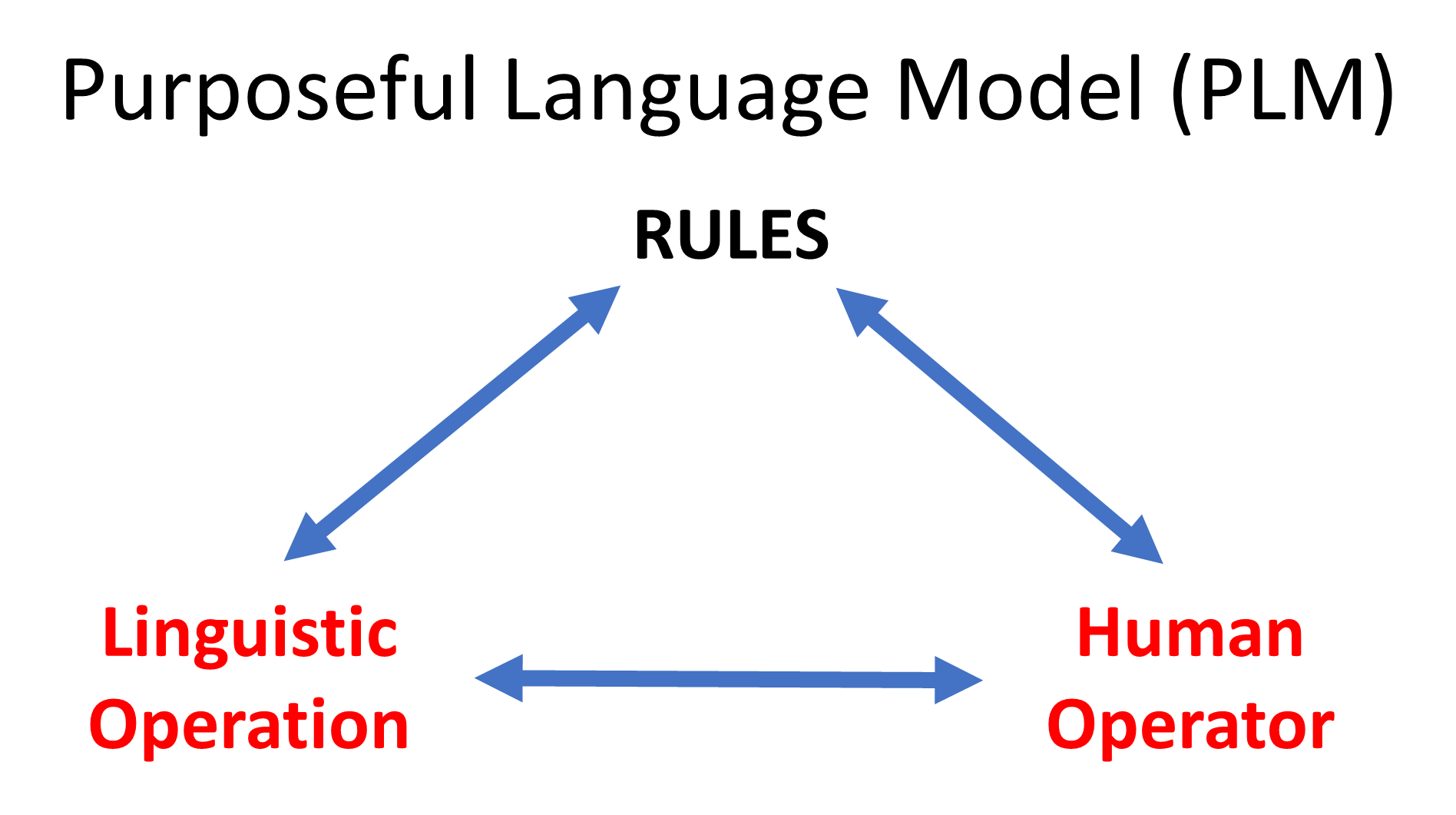
This model categorizes the basic elements of TSM:
· The parts of the language system-set
· The structural conflicts between the Operation and the Operator of language
· The set’s purposeful Mission Statement
· The Rules to mitigate the conflicts in service to the Mission Statement
The Parts of the Language System-Set
The PLM system-set contains 3-parts:
1. Linguistic Operation
2. Human Operator
3. Rules.
LINGUISTIC OPERATION:
Linguistics can be understood as the study of how language functions independently of emotion or motive. One of the areas covered by linguistics is Syntax, which is the study of grammatical structure and order that seeks a balanced structural center. Semantics, another dynamic of linguistics, deals with consistent meaning across contexts. Morphology, the science of word formation, is another dynamic that tracks how words evolve naturally and Phonetics / Phonology studies neutral sound patterns and how humans attach meaning to sound.
Notice how each of these areas of inquiry represent a system of balance: syntax, semantics, morphology and phonology all interlock. The structural goal of linguistics is the same as TSM, supporting the stability and transferability of meaning. Linguistics doesn’t moralize, persuade, or self-deceive, it exists for the sake of balance by pulling communication back to a best-effort good-faith center.
HUMAN OPERATOR:
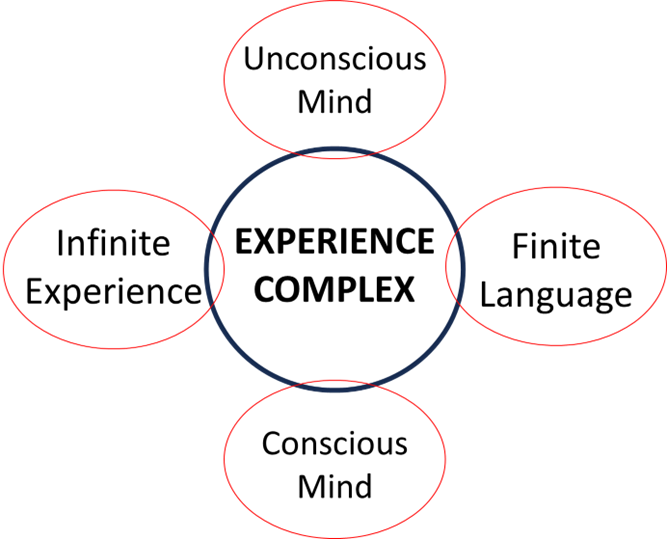
Into this pristine world of linguistics comes the Human Operator and TSM’s Experience Complex, made up of
a. Unconscious Mind
b. Conscious Mind
c. Infinite Experience
d. Finite Language
Conflicts:
As discussed at length in TSM’s Experience Complex essay, the Human Operator adds intention, up to and including agenda, to a system not designed for either. Human nature projects emotion, ego, and bias into the neutral structures of linguistics by converting pattern-seeking into agenda-serving. Putting agenda before observation is a guaranteed way to corrupt feedback, an essential element of any human system.
To this is added the inherent conflict between the infinite nature of human experience and the finite nature of language. Language is the coming together of 2 unlike elements resulting in the inability of finite abstract symbols to capture the infinite experience.
Mission Statement:
The mission statement of TSM’s Purposeful Language Model is to generate accurate and timely information, the same as linguistics. In this context, distortion is any force that interferes with this goal of reaching the natural linguistic center of accuracy and timeliness.
The Rules:
The Rules serve the system’s mission statement, to produce accurate and timely information by mitigating the distortion created by and between the Linguistic Operation and the Linguistic Operator.